What happened
You fell off a roof on the job. Who actually pays?
If you were on the clock when you fell, workers' compensation is almost certainly available, and it comes with a trade: it pays without anyone proving fault, and in exchange you generally cannot sue your employer.
What that trade does not do is release anyone else. On a typical roofing job there are three or four other parties on site, and any of them can be sued in an ordinary negligence case with no comp cap on damages.
Published July 27, 2026 · Last reviewed July 30, 2026
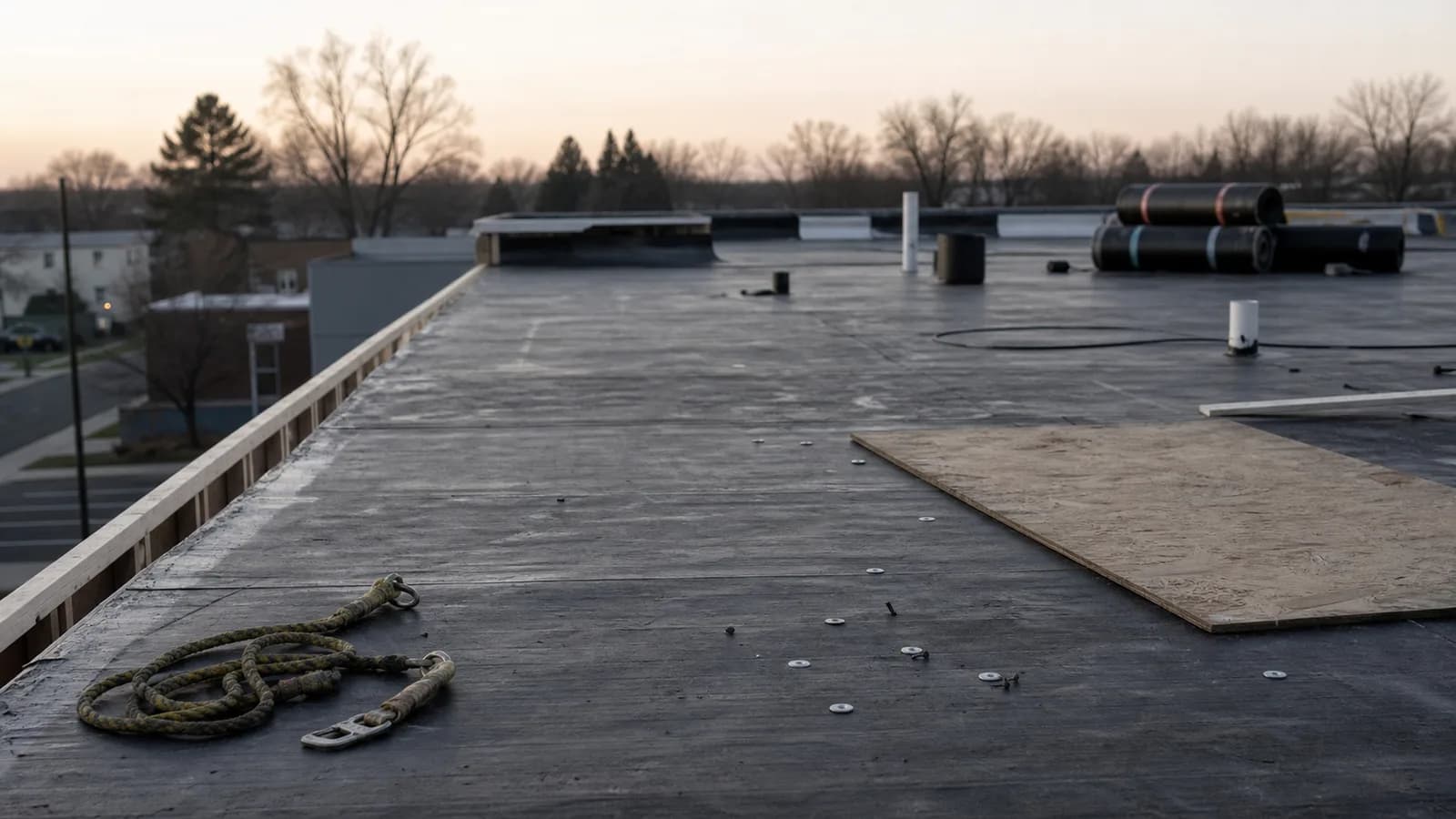
What workers' comp actually gives you
Comp is meant to be fast and predictable rather than complete. It pays your authorized medical treatment, a portion of your lost wages while you cannot work — commonly around two-thirds, subject to a state maximum — and a scheduled benefit if you end up with a permanent impairment rating.
What it does not pay is pain and suffering, loss of enjoyment of life, or your full wages. For a serious roof fall — a spinal fracture, a traumatic brain injury, multiple surgeries — the gap between what comp pays and what the injury actually cost you is enormous. That gap is the entire reason the third-party claim matters.
- Authorized medical treatment related to the injury
- Partial wage replacement while you're out
- Permanent impairment or disability benefits, if you're rated
- Vocational rehabilitation, in some states
The third-party claim is where the money is
The comp bar protects your employer. It does not protect the general contractor who controlled the site, the property owner who created the hazard, the scaffold company whose equipment failed, the manufacturer of a harness or anchor that came apart, or another subcontractor whose crew removed a guardrail and did not put it back.
This claim is ordinary negligence. There is no cap keyed to your wages, and it reaches everything comp excludes. On serious roof falls it is routinely worth several times the comp claim — which is exactly why nobody involved in the comp process is going to bring it up.
There is a catch worth knowing early: if you recover from a third party, your comp carrier will usually assert a lien to be repaid out of that recovery. That lien is often negotiable, sometimes substantially. It is not a reason to skip the claim, but it is a reason to have someone handling both at once rather than in sequence.
What OSHA does and doesn't do for you
OSHA does not pay you anything. It cites employers and it fines them. But an OSHA investigation produces something valuable: an independent record of what the site looked like, what protection was and wasn't in place, and which standard was violated.
Fall protection is the most-cited OSHA standard in the country, year after year. If the inspector finds a 1926.501 violation on the job you fell from, that finding does a lot of work in the third-party case, because it establishes the standard of care was not met and does it in the government's voice rather than yours.
You can file a complaint yourself, and there are anti-retaliation protections for doing so. If a fatality or a hospitalization was involved, the employer was already required to report it.
The evidence that vanishes in the first week
Roofing sites change daily. The missing guardrail gets installed the afternoon of the accident. The frayed lanyard goes in a dumpster. The crew that saw it moves to another job in another county and half of them are hard to find a month later.
Anything you can preserve now is worth more than anything you can reconstruct later.
- Photograph the roof, the fall point, the anchor or lack of one, and the surrounding setup — from several angles
- Keep the harness, lanyard, ladder, or boot involved. Do not let anyone take it or repair it
- Write down every company name on site, including trucks and dumpsters
- Get names and cell numbers for anyone who saw it, before the crew disperses
- Save your texts and the group chat where the job was scheduled
- Ask for a copy of the incident report your employer filed
If you were paid in cash or called a 1099
Being handed a 1099 does not make you an independent contractor. Whether comp covers you turns on the actual working relationship — who set your hours, who supplied the materials and equipment, who directed how the work got done, whether you could work for anyone else — not on what the paperwork says.
Roofing has a very high rate of workers who are misclassified on paper and treated as employees in practice. Many of them assume they have no claim and never ask. Several states also run uninsured employer funds that pay when an employer had no comp coverage at all.
Immigration status does not disqualify you from workers' compensation in most states, and it does not bar a personal injury claim.
What tends to make a claim worth pursuing
None of these is a guarantee. They are the facts an attorney will look for first when deciding whether to take a case like yours.
- There was no guardrail, safety net, or anchor point available at 6 feet or higher
- You were given a harness but nothing rated to tie off to
- Someone other than your direct employer controlled the site or the schedule
- The roof, decking, or skylight gave way rather than you slipping
- Equipment failed — a lanyard, anchor, ladder, scaffold, or lift
- OSHA opened an inspection, or the employer had prior fall-protection citations
- You were treated at an emergency room and have imaging showing the injury
Questions
Can I sue my employer for a roof fall?
Usually not — accepting workers' compensation generally bars suing your employer for negligence. A narrow set of exceptions exists in some states for intentional conduct or for employers who carried no comp insurance at all. The more productive question is almost always who else was on that site, because the comp bar does not extend to them.
I already filed for workers' comp. Is it too late for the other claim?
No. They are separate claims with separate deadlines, and filing one does not waive the other. The comp carrier will want to be repaid from any third-party recovery, but that is a negotiation, not a bar.
What if I wasn't tied off?
It matters less than people assume. The employer's duty is to provide usable fall protection and enforce its use; a worker not tying off when there was nothing to tie off to, or when the crew culture was to skip it, is a fact that cuts both ways. Most states reduce recovery in proportion to your share of fault rather than eliminating it. Do not decide you have no case on this basis.
How long do I have?
Two different clocks. Comp notice deadlines are short — sometimes 30 days from the injury — and the comp claim itself typically has a one-to-two year window. The third-party negligence claim runs on your state's personal injury statute of limitations, commonly two or three years, occasionally one. Because the shortest deadline here is measured in weeks, the safe move is to get this looked at now.
Do I have a claim if I fell less than 6 feet?
Possibly. The 6-foot line is when OSHA requires fall protection in construction, not when an injury becomes compensable. Falls from a single-story roof, a ladder, or a low edge produce serious injuries constantly, and the ordinary negligence claim does not depend on any OSHA threshold.
Read next
Comp vs. the third-party claim
Two claims, two clocks, two very different numbers. The one people miss is the bigger one.
Read thisOSHA after a fall
OSHA won't pay you a dollar. Its file is still one of the most useful documents in the case.
Read thisThe deadlines
Four separate clocks. The shortest one can be as little as 30 days.
Read thisOther situations
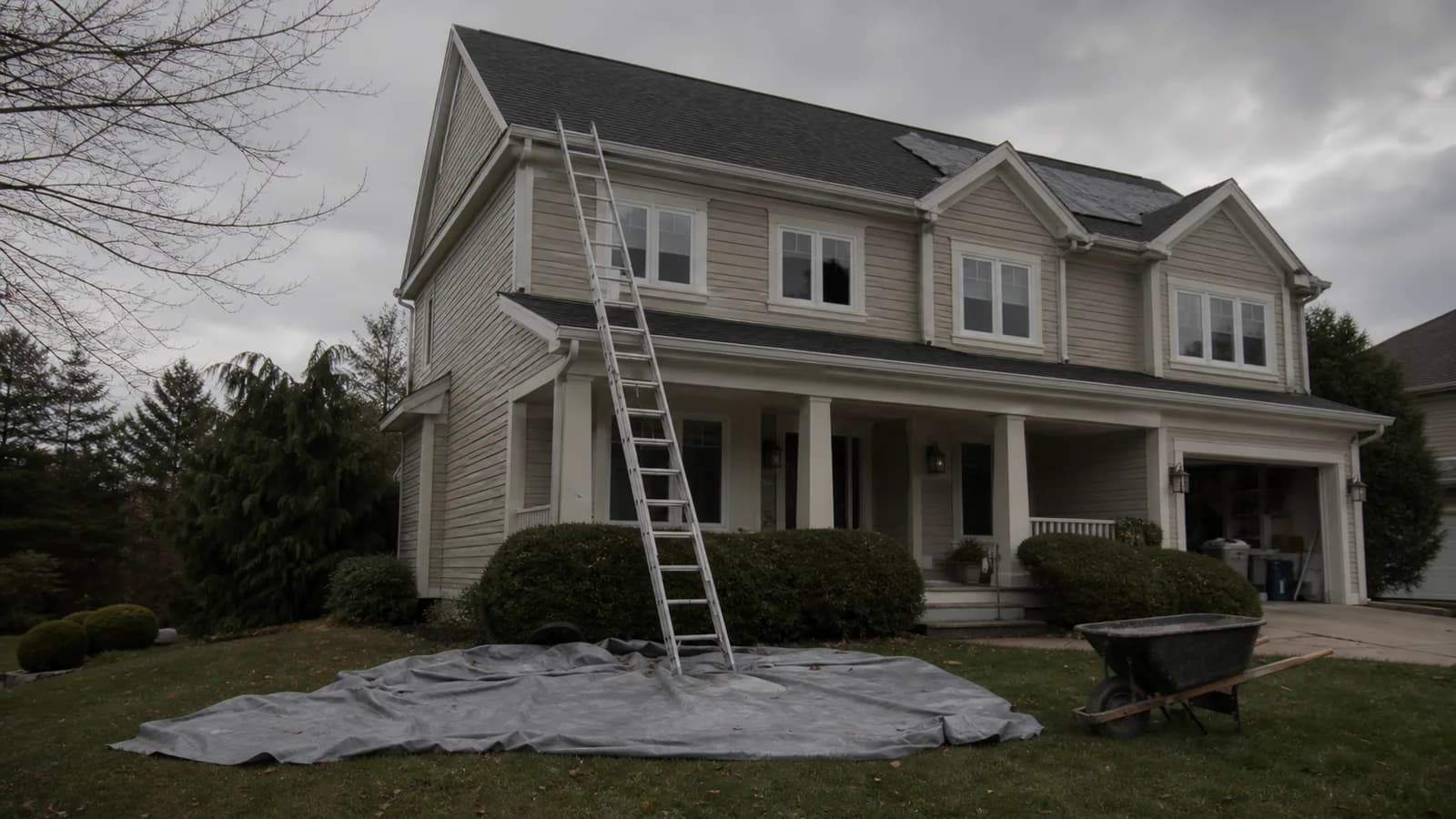
A roofer fell at my house
Usually the contractor's insurance answers for it. What determines your exposure is whether they actually had any.
Read this
A family member died
Death benefits and a wrongful death claim are separate. OSHA's investigation is mandatory here.
Read this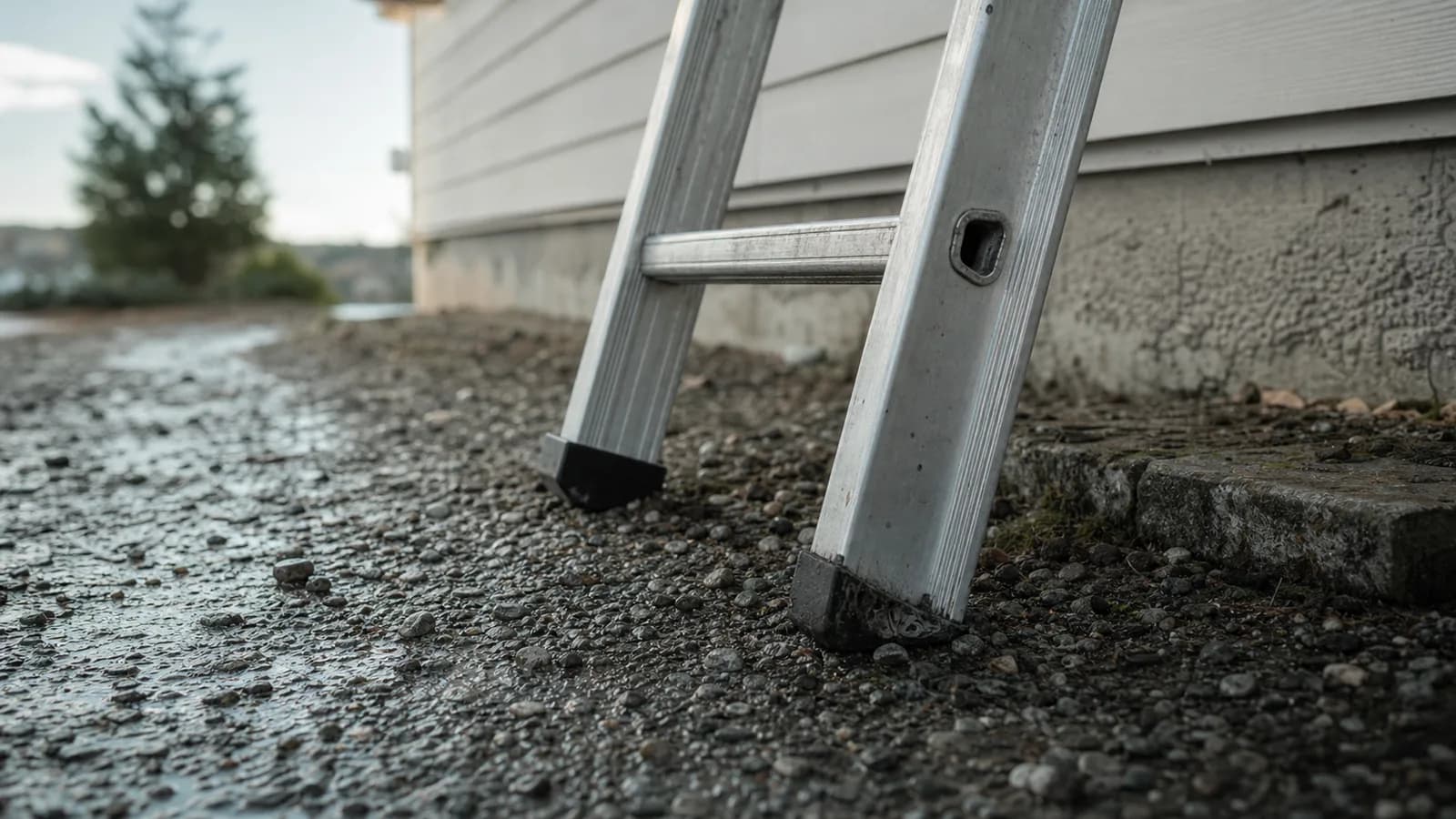
I fell off a ladder
Who supplied the ladder and who set it up usually decides the case. Preserve the ladder itself.
Read this
The roof gave way
Falling through a surface raises different questions than falling off one — mainly who knew it was weak.
Read thisEvidence and research resources
See all resourcesEvidence checklist
The records, objects, photographs, and timelines worth preserving now.
Read thisPlain-language glossary
Medical, insurance, safety, and legal terms explained without the jargon.
Read thisOfficial sources
The government, court, safety, and medical sources used to check this site.
Read thisHave a lawyer look at this
A free review tells you whether the facts you have are the facts that matter. No cost, and no obligation to hire anyone.
Free · No obligation · About 90 seconds